A biographical note
Behdad
Behzadi
Three decades inside Iranian classical music: first as a student of the radif in Tehran, then as a composer banned from working inside Iran, and now from London, where he writes and performs new work alongside the catalogue he could not perform at home.
IRoots
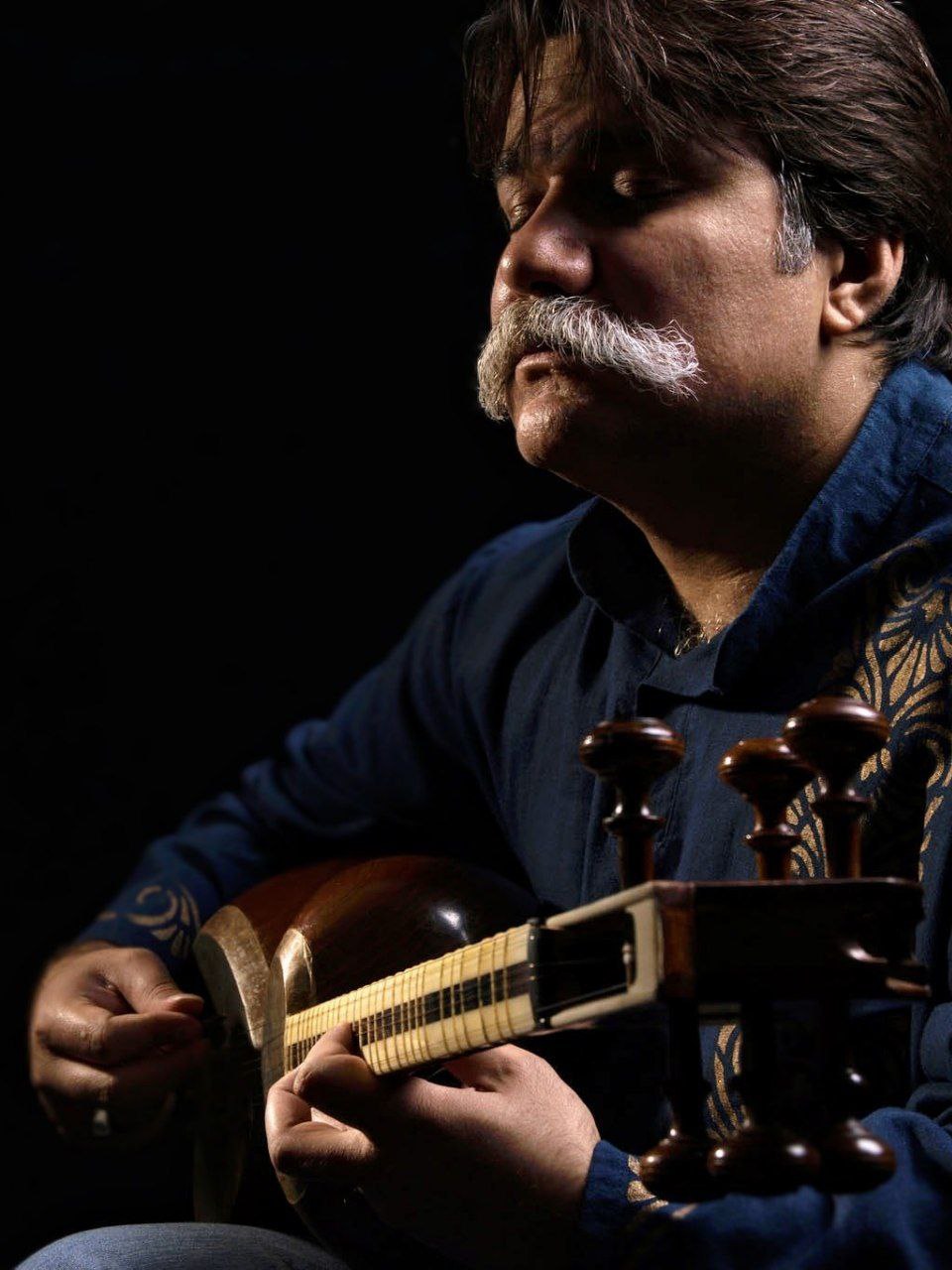
Born in Tehran, Behdad Behzadi trained from a young age in the tar, the long-necked lute that carries Iranian classical music's most demanding repertoire.
His training centred on the radif: the canonical body of Iranian classical music passed teacher to student over generations, learned by memory before it is ever performed. He emerged as one of the most accomplished musicians of his cohort, with a political voice that defined his work from the start of his independent career.
IIExile
In 2003, the Iranian state banned Behdad Behzadi from performing or recording inside the country. The work that earned the ban was the same work he had been making all along: politically charged from the start of his independent career.
He continued composing under that prohibition, then from outside it — unwelcome to the state, separated for much of that time from his family. The result is a body of work shaped by absence, written for ensembles he could not gather in the same room.
Each note is a whisper of those who were silenced. Each melody carries the hope they could not speak.
— Behdad Behzadi
IIIA new chapter
Now based in London, reunited with his family, Behdad Behzadi performs the catalogue he could not perform at home, alongside new work for voice, strings, and Persian classical ensemble.
His recent compositions hold the radif at the centre while drawing in contemporary string writing, Persian vocal traditions, and the sound-world of the diaspora. He continues to teach, record, conduct, and tour across Europe.